Stock Market Courses in Pune, Compared
Eight stock market courses, one trainer, two learning paths. Every course runs 4 to 6 weeks, in our Katraj classroom or live online, in English or Marathi. Start with your goal, and the right course usually becomes obvious.
Find your starting course
Three quick questionsAll eight share market courses
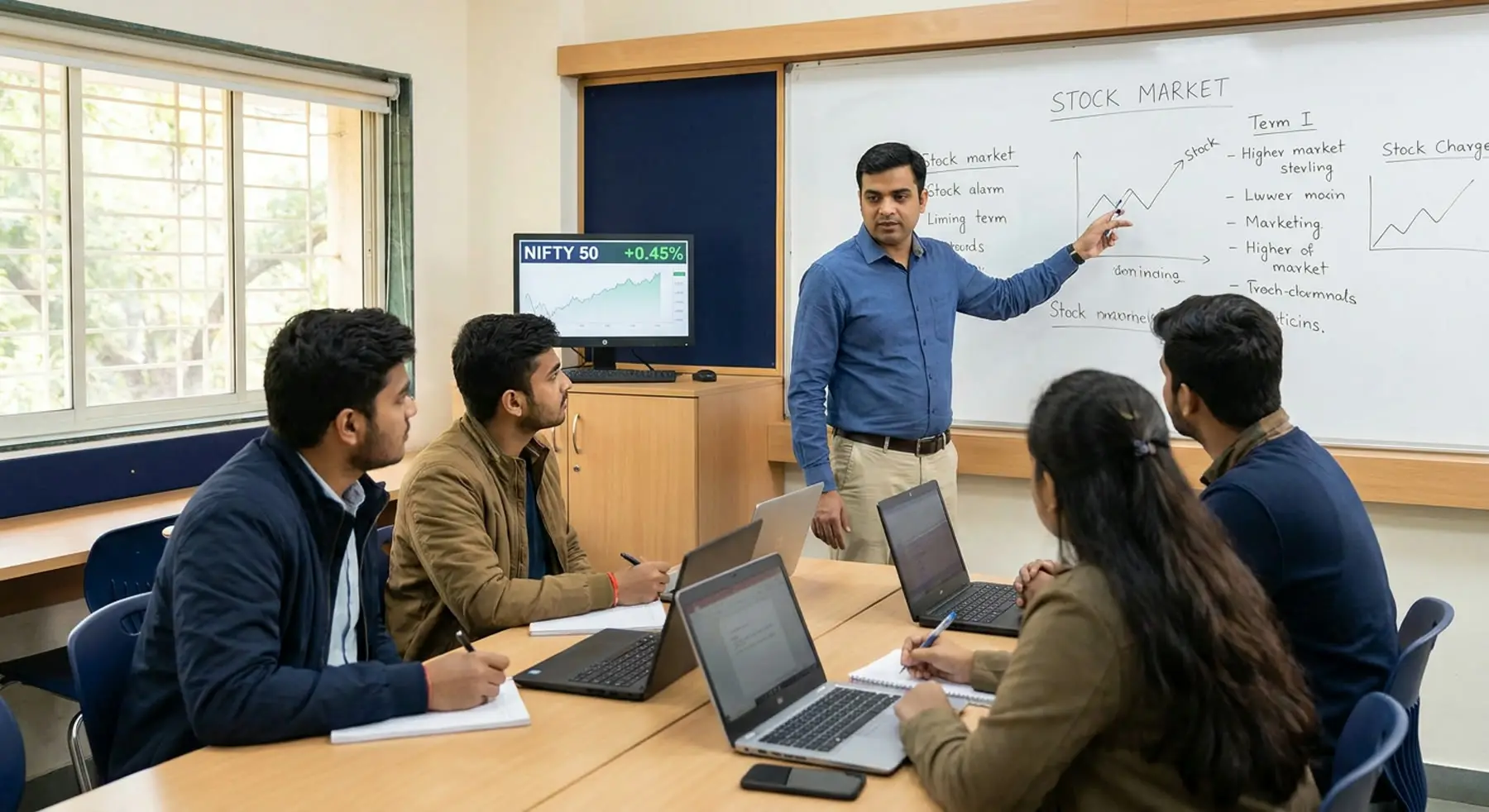
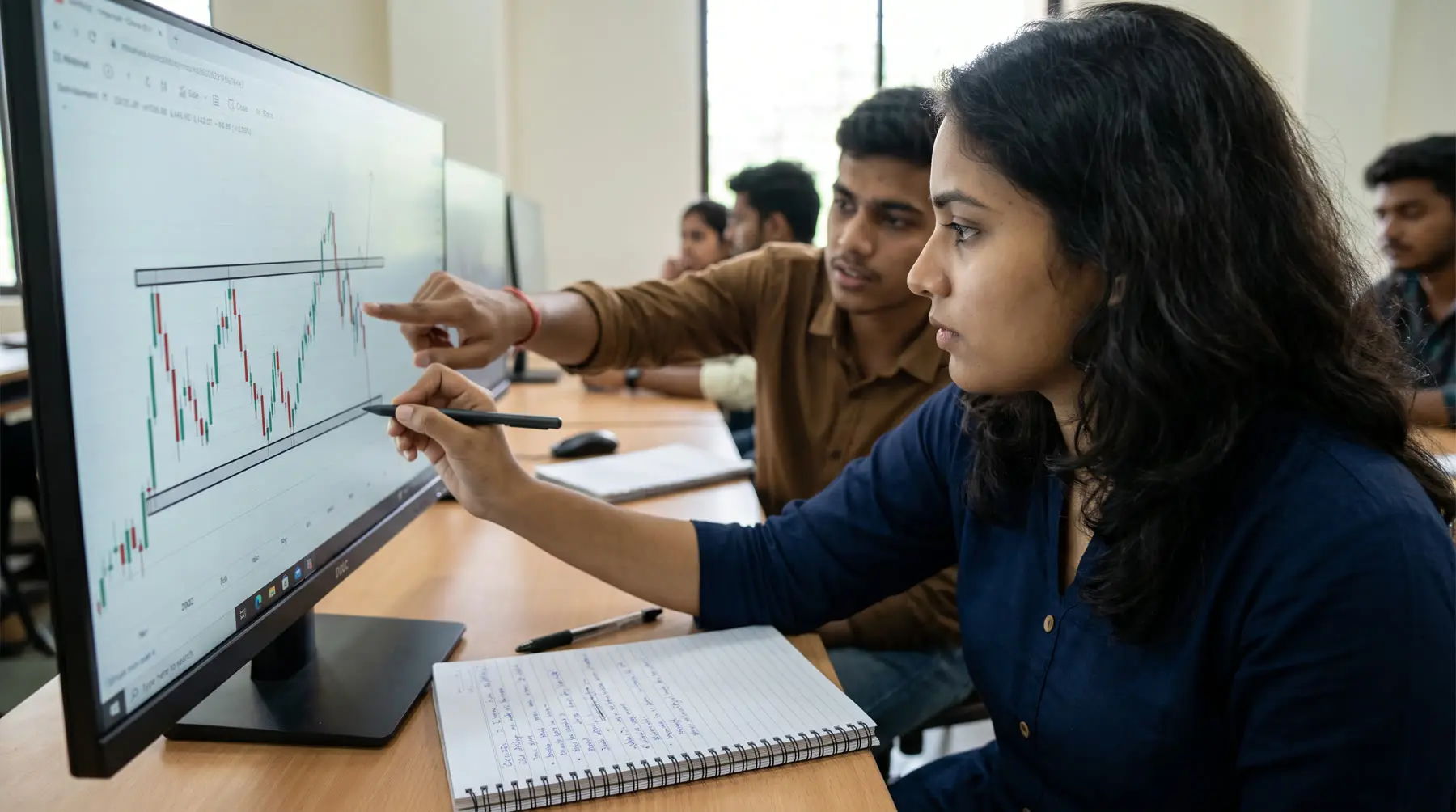


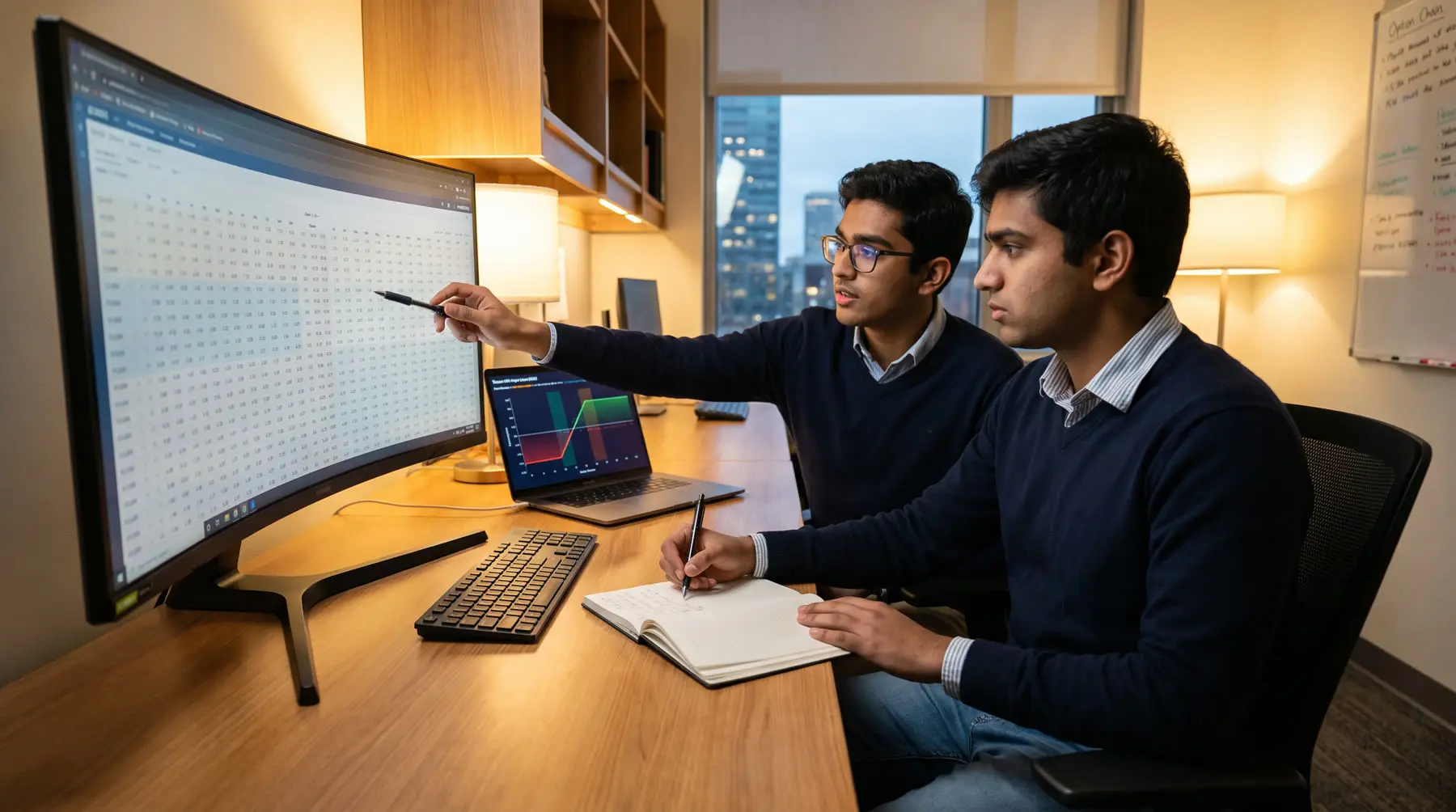
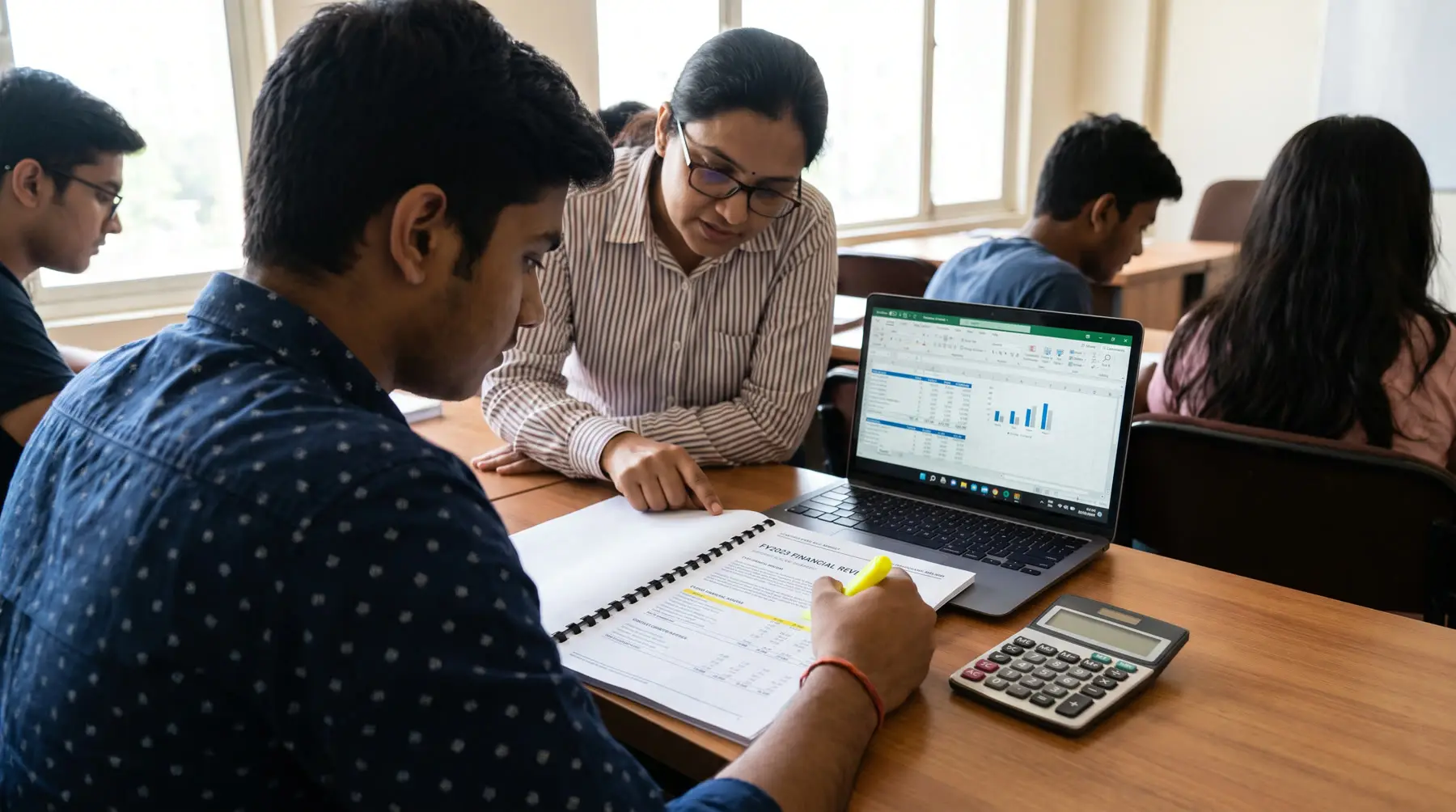


Stock market course comparison table
| Course | Level | Duration | Focus | Next step |
|---|---|---|---|---|
| Equity Market Basics | Beginner | 4 weeks | How markets, orders, indices and demat accounts work. | Technical or Fundamental Analysis |
| Technical Analysis | Intermediate | 6 weeks | Candlesticks, structure, support and resistance, indicators, setups. | Intraday or Swing Trading |
| Intraday Trading | Intermediate | 5 weeks | Market timing, volume, momentum, stops and position sizing. | Derivatives + Options |
| Swing Trading | Intermediate | 4 weeks | Multi-day setups, pullbacks, breakouts and trade management. | Derivatives + Options |
| Derivatives + Options | Advanced | 6 weeks | Futures, option chain, IV, Greeks, spreads and hedges. | Keep practising with your journal |
| Fundamental Analysis | Intermediate | 5 weeks | Annual reports, ratios, business quality and valuation. | Long-Term Investing |
| Long-Term Investing | Beginner | 4 weeks | Asset allocation, SIPs, bonds, rebalancing and portfolios. | Fundamental Analysis |
| Forex Trading | Intermediate | 4 weeks | Legal currency derivatives on NSE and BSE, what moves the rupee, event risk and hedging. | Derivatives + Options |
Every course: classroom in Katraj or live online · English or मराठी · recordings, notes and weekly doubt sessions · completion certificate · 3 months of support.
Two paths through our share market courses
Click any station to see what it covers. Intraday and Swing are two routes to the same place, so pick the one that fits your schedule.
How markets, orders, indices and demat accounts work.
- Exchanges, brokers and demat accounts
- Placing orders the right way
- Nifty, Sensex and what moves them
Candlesticks, structure, support and resistance, indicators, setups.
- Candlesticks and market structure
- Support, resistance and breakouts
- Writing a full trade plan
Market timing, volume, momentum, stops and position sizing.
- Market timing and momentum
- Intraday stop losses and sizing
- When not to trade
Multi-day setups, pullbacks, breakouts and trade management.
- Pullback and breakout setups
- Holding overnight with a plan
- Managing a trade over days
Futures, option chain, IV, Greeks, spreads and hedges.
- Futures, lots and margin
- Option chain, IV and Greeks
- Spreads and hedges with known risk
Annual reports, ratios, business quality and valuation.
- Reading annual reports
- Ratios and business quality
- Valuation and margin of safety
Asset allocation, SIPs, bonds, rebalancing and portfolios.
- Asset allocation for your goals
- SIPs, bonds and debt funds
- Rebalancing once a year
Both paths start with Equity Market Basics. If you already understand demat accounts, orders and indices, you can skip it and start with Technical Analysis or Fundamental Analysis. Sharad will tell you honestly at the demo.
Learn with a batch
- Small batches of up to 15 students
- Fixed weekend or weekday evening schedule
- Practise with peers, share sheets in class
- 3 months of support after the course
Learn one-on-one
- Sessions booked around your work hours
- Pace set by you, not the batch
- Method review of your own trade journal
- 3 months of support after the course
Fee details for each course and plan are shared at the free demo class or on WhatsApp.
Questions about our courses
Comparing us with other institutes? Read how to choose a share market class in Pune.
Which stock market course should I start with?
If you've never placed an order, start with Equity Market Basics. If you know the basics, choose Technical Analysis for trading or Fundamental Analysis for investing. The quick finder at the top of this page, or a free demo lecture, will point you to the right one.
How long are the courses?
Each course runs 4 to 6 weeks, depending on the topic. Basics, Swing and Long-Term Investing are 4 weeks, Fundamental Analysis is 5 weeks, Intraday is 5 weeks (4 weeks of classroom training plus 1 week of live market analysis), and Technical Analysis and Derivatives + Options are 6 weeks.
Can I take two courses together?
You can, but we usually suggest one at a time with practice in between. Most students finish one course, practise for a couple of weeks, then start the next step on their path.
Are the courses available online?
Yes. Every course runs live online alongside the classroom in Katraj. Online students get the same notes, recordings and weekly doubt sessions.
Are the courses taught in Marathi?
Yes. Every course can be taken in English or Marathi. Chart and indicator names stay in English, the way they appear on trading platforms.
Do I get a certificate?
Yes. You get a Stock Classes Pune completion certificate for each course you finish, along with 3 months of support after the course ends.
Still deciding? Sit in on a class.
A free demo lecture in Katraj or online. We'll suggest where to start.